I keep in mind the first time I watched a customer's shoulders drop next to a consistent bay gelding called Finn. She had actually arrived tight as a drum, breath captured up high in her breast, and stood at the edge of the sector urging she did not "do steeds." Finn stood at a distance, grazing on a hay internet. 10 mins later, via a few easy breath signs and a soft technique, they were walking side by side. No halter yet, no pressure, simply her visibility and his approval. She murmured later, practically surprised, "I really felt seen." That is the heart of equine-facilitated coaching, the way horses seem to welcome us back right into our bodies, our stability, and our sense of belonging.
Why equines assist us locate connection
Horses checked out the globe through feeling, pressure, stance, and objective. They respond to the power we bring, not the story we inform. A horse does not care about your work title, your diagnosis, or your shield of brilliant words. It respects whether you are systematic, grounded, and considerate of space. When a thousand-pound target animal recognizes you, matches your breathing, or actions toward you, the comments lands in a much deeper location than language.
That is one factor equine-facilitated training commonly helps people who really feel separated from themselves or from others. The arena comes to be a place where harmony matters more than performance. If your inner state does not match your external signals, a horse will show it via motion. If your body softens, your breath slows, and your objective comes to be clear, the horse will frequently soften with you. The result is not just understanding, however a really felt shift. For several, particularly those that have attempted talk-based assistances without full relief, experiential knowing with equines presents a brand-new doorway.
Sorting the area: coaching, tasks, and therapy
The equine field includes numerous approaches, and the hodgepodge can be complicated. Right here is how I describe it to families, clinicians, and organizations making a decision where to start:
- Therapeutic horsemanship refers to a wide classification that includes installed and unmounted activities shown by licensed riding teachers that adapt the setting to sustain bikers with varied demands. It frequently builds balance, sychronisation, interaction, and self-confidence. Many centers consist of equine-assisted tasks that promote recreation abilities, social link, and discovering without always targeting medical diagnoses. Equine-assisted solutions is an umbrella term some organizations make use of to capture the wide variety of assistances supplied with steeds. Programs may include riding lessons, ground-based discovering, professionals support, and wellness workshops. Equine-assisted coaching, also called equine-facilitated training, concentrates on individual or professional advancement using ground-based workouts. The coach guides reflection and ability structure around objectives such as borders, leadership, interaction, and resilience. There is no diagnosis or therapy plan, and the procedure complements, instead of replaces, therapy. Clinical equine treatment engages qualified mental wellness specialists or physical therapists that use the steed as component of a therapeutic strategy. You may see this for injury therapy, anxiousness support with horses, or sensory assimilation job within an autism equine finding out program.
Centers usually mix offerings. You may see equine-facilitated wellness teams on weekend breaks, ADHD equine learning support after institution, and team building with equines for regional companies. The key is to match the strategy to the goal. If you desire leadership practice and personified self-confidence, coaching fits. If you require to treat PTSD or an eating disorder, seek psychological health specialists that integrate equines right into therapy.
What equine-facilitated coaching in fact looks like
A great training session is not a horse experience. No safety helmets needed unless the program includes mounted time, and much of the job occurs on the ground. I normally begin in a silent area, introduce the steed free or on a loose lead, and co-create a plan with the client. Goals can be as easy as finding out to set and hold a limit line, or as complicated as bring back count on after workplace burnout.
In practice, the arena ends up being a living laboratory. If you rush, the horse drifts away. If you focus yourself and ask clearly, the equine turns and advance. There is no one appropriate way. Some clients lead an equine with obstacles to check out how they manage pressure. Others stall and find out to tolerate distance without collapsing their own demands. The understanding often tends to land due to the fact that the body participates. You are not just speaking about borders, you are practicing one with a receptive partner.
An initially session, step by step
- Arrive and work out, with a short safety and security short that includes where to stand, how to touch, and when to pause. Grounding method, such as box breathing or a sensory check-in, to help your nerve system change into a responsive state. Meet the steed at a distance, observing stance and signals, then select how to approach. Engage in a basic task, like asking the equine to stroll with you at a matched rate or to quit at a cone while you hold a limit rope. Debrief with your instructor, observing where the job mirrored day-to-day patterns, and set one little practice to repossess right into your week.
That arc can unfold in numerous ways. If stress and anxiety flares, we slow down. If a customer is kinetic, we may establish a movement-rich task that includes weaving posts, backing up with clear hand signals, and resetting when attention leaps. The equine's feedback keeps us honest.
What the steeds educate our bodies
Clients commonly ask why this works when they have already check out guides and tried to believe their way to transform. Horses teach via somatic channels. If you are holding your breath without discovering, an equine leaning far from you will certainly make that pattern apparent. If your feet hardly touch the ground after years in high-alert setting, you will discover it hard to lead a steed with quality till you root yourself. That is somatic healing with horses, the way body knowing and psychological learning braid together.
There is likewise the matter of co-regulation. Many people discover their heart price and muscular tissue tone modification around calm steeds. The barn provides rhythm, from hooves on dirt to distinct breath. Brushing welcomes reciprocal motion and a mild pressure touch that can downshift a jangly nervous system. While not a cure-all, this atmosphere offers a scaffold that chat alone can not. I have actually seen customers tracking stress go from an eight to a four in twenty minutes, then hold that adjustment while browsing a barrier program with their horse companion. It is not magic, just a clear responses loop.
Who pertains to the arena
I collaborate with a vast arc of individuals. Some look for equine-facilitated wellness after a life transition, like a divorce or career adjustment. Others followed exhaustion or an imaginative block. Parents bring youngsters for ADHD equine discovering assistance when school comes to be a daily fight. Individuals with sensory level of sensitivities explore an alternative treatment for sensory obstacles since interior clinics feel too intense and tight. Autistic teens sign up with an autism equine learning program developed around predictability and option, not forcing eye get in touch with or tiny talk. Adults with panic signs and symptoms come for anxiety support with equines to practice breath and limit abilities in a setup that feels safe sufficient yet real enough to stretch.
For teams, group structure with steeds surface areas characteristics quicker than a boardroom can. I have actually seen a team understand that 3 of them repeatedly over-function, one vanishes under tension, and none of them asks cleanly for assistance. The horse will certainly stagnate through the barrier up until the team calibrates its roles. That lesson returns to the office on Monday morning.
Safety, principles, and realistic edges
A liable program puts safety first, for both people and steeds. You should constantly see a knowledgeable equine handler or teacher existing, also in pure coaching sessions. Facilities should have clear guidelines around headgears if riding is entailed, emergency situation procedures, and equine welfare. The equines themselves require regular rest, turnover, and the right to say no. If a horse pins ears, actions away, or looks strained, your facilitator should respond promptly and readjust the plan.
Not every condition is a suitable for every layout. If a person has a background of physical violence toward animals, I will not start in the field. If a customer has unchecked seizures or remains in acute psychosis, I describe a clinical team. Individuals with severe allergies might require a customized strategy that limits pet grooming or uses an outside room with masks. The moral line is this: suit services to the individual, not vice versa, and do not push the equine or the human right into situations they can not browse safely.
A couple of tales from the rail
A forty-year-old product manager involved restore confidence after a poisonous job. Her words were constant, however her body hid supporting in the shoulders and a routine of excusing whatever. With a person draft cross, we exercised walking with intention and stopping without shrinking. By week 4, she could request room with one silent breath and a hand increased, after that maintain that border for a complete minute while the equine tested delicately. She reported utilizing the exact same gesture in tense conferences, minus the equine, to great effect.
A fourteen-year-old with ADHD showed up with a knapsack loaded with fidget devices and a background of detentions. He enjoyed speed and hated waiting. We set up a challenge training course that compensated micro-pauses. The rule, stated just, was that the horse can stagnate forward up until the handler's feet were still and his eyes had actually checked 3 points ahead. The very first try resembled a tangle. By the fifth, his feet grown, breath came down, and the horse strolled smoothly with. He timed his own runs and shaved secs not by hurrying, but by stopping with purpose. His mother later saw he used the very same technique for homework, checking steps out loud prior to starting.
A moms and dad of a child with autism came since consultations seemed like a rotating door of motivates and sticker labels. In the field, we provided her child selections: which brush to make use of, whether to come close to from the shoulder or the rump, when to step away. The kid loved the predictability of brushing strokes and the weight of leaning gently against the steed's shoulder. After numerous sessions, changes in your home boosted when the household added a brief "barn regimen," even without an equine, that simulated grooming's rhythm prior to bedtime.
How teams discover with horses
Horses are extremely reasonable regarding management. They reply to quality, consistency, and common respect. A team-building session might include moving a loose steed via a collection of cones without touching the pet, only by collaborating pose, area, and intent. This discloses who speaks out, who pays attention, where problem evasion lives, and exactly how the team takes care of uncertainty. The discovering is sticky since it is really felt. Once a group experiences that the horse relocates ideal when the quiet analyst maps the course and the extrovert modulates volume, it re-weights roles back in the workplace.
I choose little groups for group structure, normally 6 to twelve individuals, with at least two horses and two facilitators. That proportion offers area for monitoring and method. Debriefs matter more than the obstacle. If the team misses out on the knowing and just celebrates "we did it," we have lost the gold.
Preparing for your very first visit
The practicalities are basic, though not constantly evident to metropolitan clients. Put on closed-toe footwear and layers you do incline dusting off. Leave hanging headscarfs and noisy precious jewelry at home. Plan for the climate. Bring a canteen, and if you are scent-sensitive, let the staff recognize so they can select a quieter grooming area. If you fidget, claim so. Great facilitators value honesty more than bravado.
Shorter sessions of 45 to 60 mins are commonly more reliable than lengthy marathons. Your nervous system can soak up only a lot novelty at the same time. A series of five to 8 conferences, spaced once a week or every various other week, has a tendency to produce visible shifts. You will recognize the job is landing when the adjustments you feel with the steed turn up in tough conversations or early morning routines.
A straightforward list to establish yourself up for success
- Comfortable, durable shoes and weather-ready clothing you do incline getting dusty. A clear, small goal for the day, like "practice claiming no" or "notice my breath under tension." Willingness to stop briefly and call what you are feeling, also if it is messy. A strategy to integrate one small practice between sessions, such as three minutes of based standing before phone calls. Communication with your other carriers if you are additionally in therapy or OT, so supports align.
Measuring development without getting rigid
People request for metrics. It is reasonable to want evidence that time and money are well spent. Some centers make use of official tools, others remain casual. I encourage a crossbreed. Prior to you start, select 2 or 3 indicators that would tell you life is getting much easier: less shutdowns at work, much better rest onset, more comfortable eye call, less institution meltdowns. We likewise look at body pens, like breath price during an obstacle or the time it takes to resolve from agitation.
Quantify where you can. If panic spikes daily, track regularity and duration each week you attend. If your group's interaction breaks 7 times in a two-hour meeting, check that number once more a month after your arena day. Maintain the actions local and honest. Equines aid most when the emphasis stays on function, not on thrilling a spreadsheet.
Working with children and sensory differences
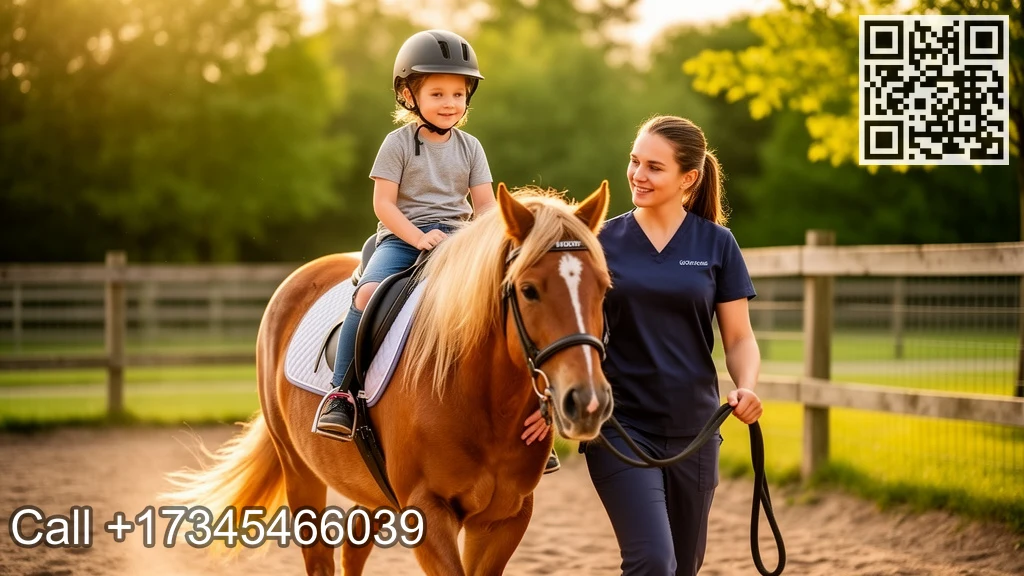
For kids with sensory handling differences, the barn setting can be a variety. Appears resemble. Hay can impulse. Natural leather has a strong scent. Those elements can bewilder, or they can work as direct exposure with control. Good programs change the sensory lots. This might look like utilizing silent hours, grooming behind-the-scenes with natural light, or beginning with discuss a sheepskin pad before relocating to a curry comb. For some youngsters, installed time at the walk, with a sidewalker and a leader, offers deep pressure and vestibular input that aids law. For others, the tranquility of standing with a horse and matching breath functions better. Different treatment for sensory obstacles ought to never ever be a one-size script.
ADHD equine discovering assistance succeeds when it networks motion and benefits attention, not reductions. Construct jobs that have start lines, goal, and an opportunity to reset without shame. Offer prompt, concrete feedback. Let the equine's rhythms do a few of the training. Children find out fast when the lesson is personified and the stakes feel real but kind.
Credentials, concerns, and picking a program
Vet your service providers. Ask what qualifications or licenses they hold. Trainers may carry qualifications in healing horsemanship from organizations that educate flexible riding professionals. Equine specialists may be experienced handlers with years of equine care and behavior. Trains may have ICF or various other mentoring accreditations plus extra research in equine-facilitated training. If you are seeking professional job, validate that an accredited mental health professional or physical therapist is really involved, not simply spoken with once.
Walk the home. Look for clean water pails, safe fencing, and steeds with bright eyes and totally free movement. Ask the number of sessions each steed does each day. The response ought to be moderate, with rest and turnover integrated in. Inquire about safety and security methods, emergency plans, and exactly how they match horses to clients. A thoughtful answer signals maturity.
Listen to your gut during a test go to. If you really feel hurried, unheard, or harmful, attempt one more program. The ideal fit issues more than the appropriate brand name.
Cost, accessibility, and equity
Prices differ. In my region, private coaching sessions with steeds run from 100 to 250 dollars for an hour, with team prices lower each. Medical treatment integrated with steeds can cost more, and insurance policy coverage is combined. Some facilities offer scholarships, moving ranges, or community gives. Veterans teams and nonprofits frequently underwrite services for details populations. Ask. If expense is a barrier, take into consideration tiny group formats or brief, focused collection. Quality beats amount. Four well-timed sessions can move a pattern if you exercise between them.
Access likewise consists of transport and flexibility. If a client utilizes a mobility device or pedestrian, ground-based operate at a well-designed facility can still be rich, utilizing mounting ramps for distance, taller pet grooming blocks, or changed lead job. Inquire about ease of access choices ahead of time.
When it is not the appropriate path
Horses are except everybody. A deep fear of huge animals that does not soften with time can make the job a lot more regarding survival than understanding. Allergic reactions sometimes rule the barn out. Some individuals prefer water or music as their key restorative method. That is fine. The concept below equine-facilitated coaching is relational, somatic knowing with receptive responses. You can find that with canines in canicross, with rock in a climbing up fitness center, or with trees on a path. If you attempt equines and it does not click, recognize that and select one https://www.hhooves.com/brain-body-lessons more path towards belonging.
Bringing the discovering home
The best results come when you equate sector understandings into day-to-day rituals. If you found that growing your feet and taking a breath out welcomed Finn to step towards you, examination that posture prior to a hard conversation with your teen. If your team found that silence assisted the steed select, build a five-second pause prior to addressing inquiries in meetings. Small techniques, duplicated, re-wire patterns.
I had a client that taped an image of her steed companion close to her computer system screen with one phrase beneath it: match your within to your exterior. On days when her schedule swelled and her jaw started to hurt, she glimpsed left, stood up, really felt the floor, and allow her breath go down an inch. That thirty-second reset altered the high quality of her following conversation. Over time, it transformed her high quality of life.
Finding your herd
Belonging is not just about other people. It is likewise regarding coming from your very own body and internal knowing. Equines often tend to satisfy us there, in the void between how we think we are and how we really are. When an animal that could run away makes a decision to stay, when it turns its ear towards your voice and strolls with you, a thread draws tight in between nervous systems. That string can advise you exactly how to be with on your own, after that with others.
Whether you are a parent looking for a steadier rhythm in the house, a leader desiring cleaner boundaries, or a teenager who requires a room where words are optional, equine-assisted coaching offers a based means ahead. It lives within the broader landscape of equine-assisted services, together with restorative horsemanship, equine-assisted activities, and scientific therapies. The right match depends upon your goals. Ask inquiries, go to barns, depend on your feeling of fit, and pick the program that appreciates both human and horse.
I still consider that initial client with Finn. She showed up particular that connection had actually slipped out of reach. She entrusted hay on her sleeve and a peaceful smile. The arena did not fix her life. It did something easier and much more profound. It advised her that belonging is a practice, discovered step by step, breath by breath, with an instructor who talks in hooves and silence and presence.